Quality is not a new concept for Mauritania. The Mauritanian government has long recognized that the lack of quality reference frameworks, together with the absence of measurement guarantees, hinders the country’s economic and industrial development. Driven by this awareness, Mauritania embarked on a path towards improving quality that led to the creation of the National Office for Standardization and Metrology (ONANOR). This institution aims to establish quality standards and promote compliant practices, thereby contributing to the nation’s growth and sustainable development.

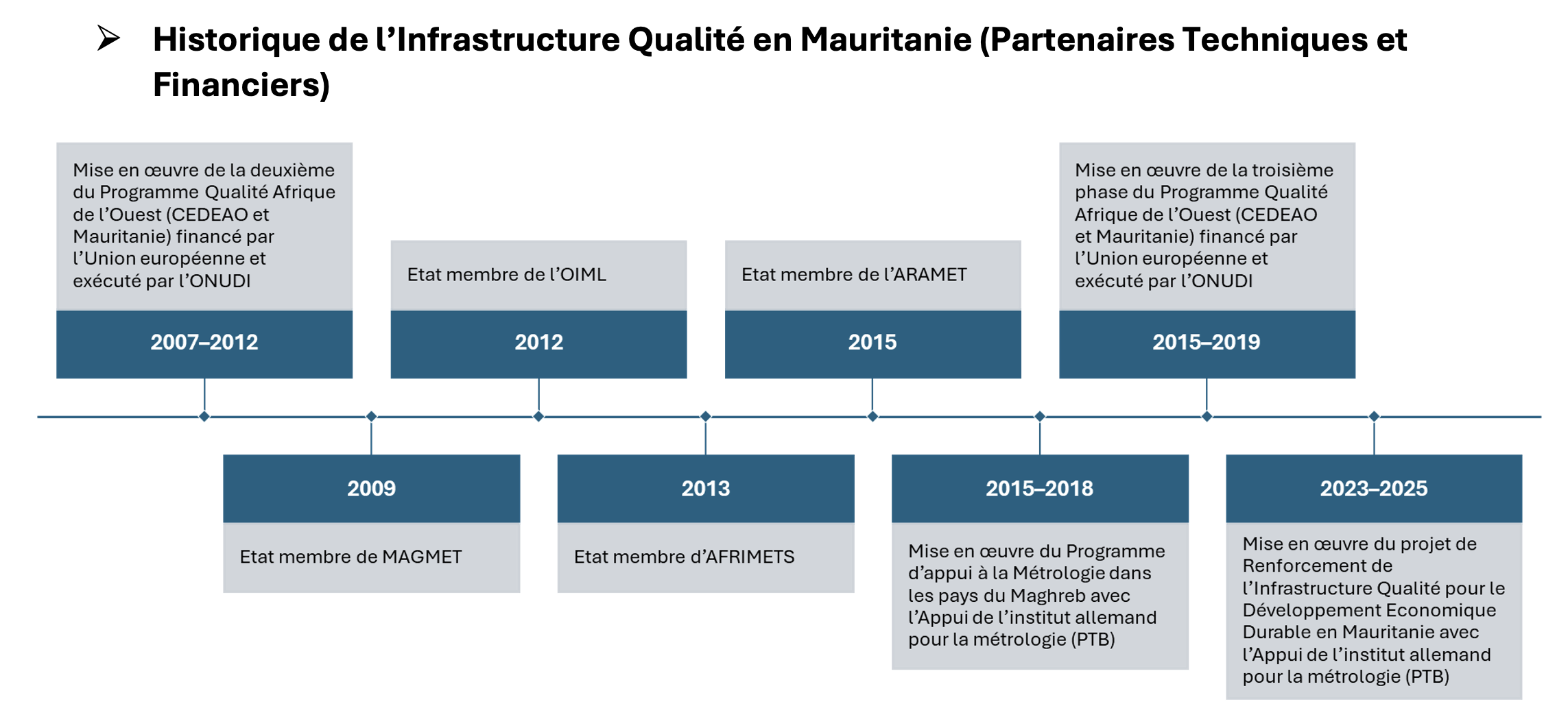
Because quality is a shared effort and everyone’s responsibility, the Mauritanian government has worked from the outset with internationally leading technical and financial partners in quality to ensure the sustainable development of the country’s quality infrastructure and establish a culture of continuous improvement.

Quality infrastructure refers to the set of systems, structures, institutions and resources needed to implement and manage quality processes in a country or organization. This includes, in particular, standards, regulations, standardization bodies, testing laboratories, and certification and accreditation systems. An effective quality infrastructure is essential to ensure that products and services conform to defined standards, foster business competitiveness, protect consumers and promote sustainable development. It also plays a crucial role in the continuous improvement of processes and performance across different economic sectors.
The main pillars of quality infrastructure in Mauritania are metrology, standardization, accreditation and certification

2025 © All rights reserved.